
California YIMBY and allies / partners are roughly half-way through the work to end the housing shortage in California, which is the most important public problem in the most important state in the United States of America. How?
First, some background:
California built north of 200,000 new homes per year in the 1950s with a population under 10M. We are building 80,000 homes today for a population over 40m. Why? Because we made building new homes illegal.
This led to California having the highest rate of poverty in the United States because of our self-created housing shortage. What does that mean? It means if you are a poor kid, you are better off growing up in Mississippi.
The difficult thing on housing is that you need to bore a giant hole through 4x domains of land-use policy in order to enable the market to come back. Essentially we need to undo 70 years of NIMBY land-use policy that covers every jurisdiction in heavy layers of red tape. Once we complete these tasks, cranes the sentinels of Abundance—will be visible across California’s cities.
Think of California YIMBY like a 15-person red-tape boring crew, tunneling away at:
Ministerial Approval: If your project is legal, can you build it? Or can a local City Councilor, neighborhood activist still veto it? With the housing exemption from CEQA1 and HAA2 strengthening we are now ‘defacto-ministerial’ which means in California if your project is legal, nobody can stop you from building. This is the hardest political lift.
Zoning: Is it legal to build your project? With SB793 and strengthening the RHNA4 process we have up-zoned high-demand cities via the largest up-zoning in the history of the United States.
Fees: Today +/- $200K per home in high demand California Cities… e.g. the cost of building a home in Ohio.
Implementation: Building codes, power/water/sewer hookup, plan-check etc. Have you experienced San Francisco Department of Building Inspections?
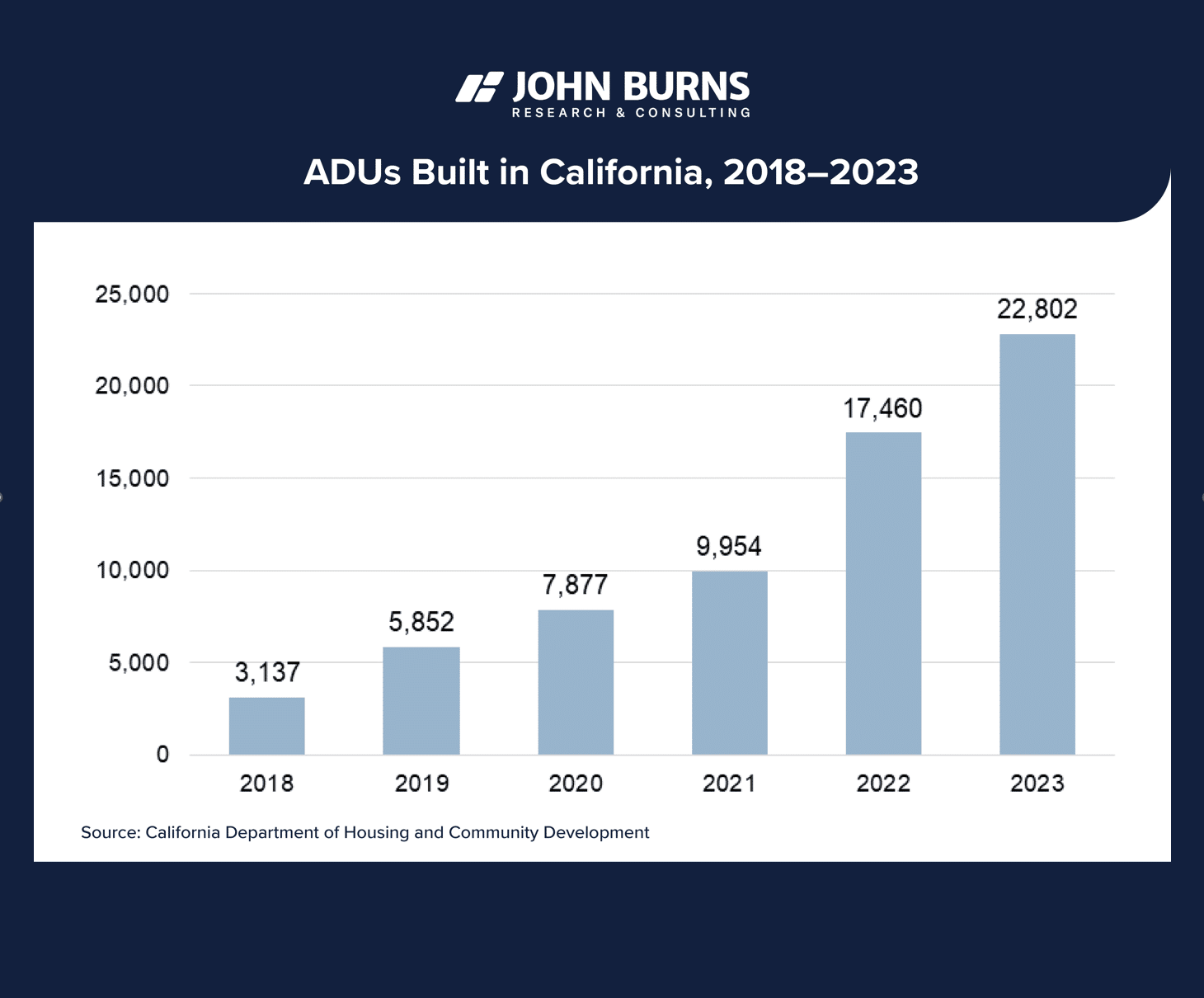
Until all 4x layers are cleared, you don’t get much. However, we have successfully punched through all 4x layers for ADUs
 Le boom des ADUs aux États-Unis : une contribution significative à l’atténuation de la crise du logement
 5 (backyard cottages). ADUs have gone from 2,000 units/year to 22,000 units a year. It’s now a fast-growing $3-4B/year market. When we punch through on Multifamily, we’ll open up a $100-$200B+/market, building 250,000+ new homes per year for current and future Californians.
Access to economic opportunity is the core of the American dream. We are on path to restoring that access for the most important agglomerations of talent and industry in the United States.
But we have about 50% more work to do. It took us 7 years to do the first 50%. The last 50% will take another 7 years (roughly) unless the State’s largest employers (Google, Apple, Facebook) help. So far their internal Government teams have sat this one out.
Notes :
- CEQA – California Environmental Quality Act: California law requiring the assessment of the environmental impacts of projects subject to public approval.
- HAA – Housing Accountability Act: California law limiting municipalities’ ability to deny or delay housing projects that comply with objective standards.
- SB 79 – Abundant and Affordable Homes Near Transit Act: Law facilitating the construction of multifamily housing near transit stations by relaxing certain zoning restrictions.
- RHNA – Regional Housing Needs Allocation: System for allocating regional housing needs, setting a construction target for each municipality to achieve.
- ADU – Accessory Dwelling Unit: Secondary dwelling located on the same lot as a primary residence (e.g., independent studio, small backyard house).